



A Bridge Between the Ancient and the Modern
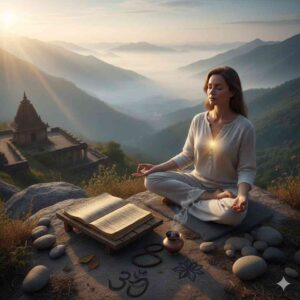
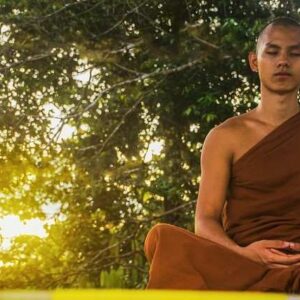
Meditation, ordhyana, holds a central place in Vedic practices, serving as a pathway to self-realization, inner peace, and alignment with the universal order. TheVedasand their subsequent texts, like theUpanishadsand theBhagavad Gita, celebrate meditation not merely as a tool for mental clarity but as a profound spiritual discipline. Yet, in today’s fast-paced, distraction-filled world, the question arises: Are we truly embracing meditation in the way the Vedas envisioned, or have we diluted its essence into a surface-level wellness trend?
1. Meditation in Vedic Philosophy: A Tool for Transcendence
The Vedas present meditation as a practice that transcends the mind’s turbulence to reach a state of higher consciousness:
- Connection with Brahman: The Upanishads describe meditation as the means to unify the individual soul (atman) with the universal consciousness (brahman).
- Mundaka Upanishad: “Meditate on the self as the light, the immortal.” This signifies that meditation leads to self-discovery and liberation (moksha).
- Focus and Stillness: The Rigveda celebrates the power of focused thought, likening meditation to the quieting of a stormy sea, where truth and clarity emerge.
2. Scientific Validation of Ancient Practices
While the Vedas present meditation as a spiritual discipline, modern science has validated its benefits for mental and physical well-being:
- Stress Reduction: Studies by the American Psychological Association confirm that regular meditation reduces cortisol levels, improving resilience against stress.
- Improved Focus: Research published in Nature Neuroscience highlights how mindfulness practices rooted in meditation enhance cognitive performance and decision-making.
- Mental Health: A 2023 report by the World Health Organization found that meditation lowers anxiety and depression by over 30% in practitioners.
These findings highlight how the ancient Vedic practice is increasingly relevant in addressing today’s mental health crises.
3. Are We Embracing Meditation as Intended?
Despite its growing popularity, the way meditation is often practiced today can differ significantly from its original Vedic essence:
- Superficial Adoption: Many view meditation as a stress-relief tool rather than a deeper spiritual pursuit. Apps and wellness programs often strip away the philosophical underpinnings of dhyana, reducing it to a mere lifestyle accessory.
- Example: Chanting Om, a sacred Vedic practice meant to connect with universal vibrations, is often used casually without understanding its spiritual significance.
- Disconnection from Purpose: The Vedas teach that meditation is a means to understand the self and the universe, not merely a technique for calming the mind. This deeper purpose is often lost in modern practices.
4. Reviving the Spirit of Vedic Meditation
To align modern practices with Vedic teachings, individuals and communities can take steps to deepen their understanding:
- Education on Philosophy: Incorporate Vedic teachings on meditation in yoga and mindfulness programs to ensure practitioners understand its spiritual dimensions.
- Holistic Practice: Go beyond breathwork and postures by integrating self-reflection, chanting, and a focus on ethical living (dharma), as emphasized in the Vedas.
- Community Spaces: Temples and spiritual centers can create environments where meditation is practiced with respect to its Vedic roots.
5. Why Meditation Matters More Than Ever
In an age of constant digital distractions, environmental crises, and mental health struggles, meditation offers a profound way to reconnect with ourselves and the world:
- Inner Stability: The practice helps individuals find peace in a chaotic world.
- Global Harmony: By emphasizing interconnectedness, meditation rooted in Vedic philosophy can inspire a collective sense of responsibility for societal and environmental well-being.
Conclusion: A Call to Deepen Our Practice
Meditation, as envisioned in the Vedas, is far more than a wellness tool—it is a transformative journey toward self-realization and universal connection. While its popularity has surged, there is a need to go deeper, embracing the spiritual and philosophical wisdom that underpins it.
The question is not whether meditation is relevant—it clearly is—but whether we are engaging with it in its fullest potential. By honoring its Vedic roots, we can unlock its power to guide both personal growth and global harmony. As the ancient texts remind us, “When the mind is still, the self shines in its true essence.”