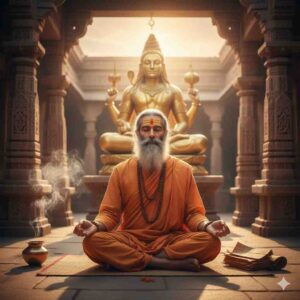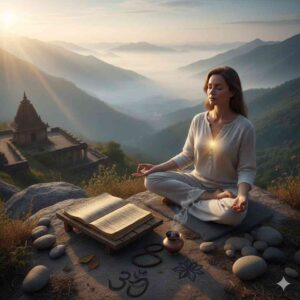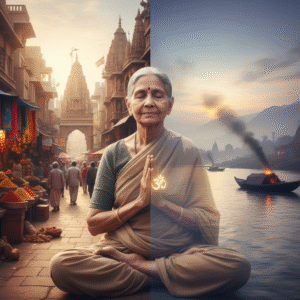




An Ancient Practice with Timeless Relevance
Meditation, ordhyana, has been a cornerstone of Hindu spiritual practices for millennia. Rooted in ancient texts like theVedas,Upanishads, and theYoga Sutras of Patanjali, meditation is not merely a method of relaxation but a profound journey inward. It serves as a tool for self-realization, mental clarity, and spiritual awakening.
In today’s fast-paced and often chaotic world, meditation’s significance has only grown. Its ancient wisdom offers modern seekers a way to find inner peace, balance, and connection to their deeper selves.
1. The Foundations of Meditation in Hinduism
- Vedic Origins: The earliest references to meditation appear in the Rigveda, where sages sought to connect with the divine through focused contemplation. The concept of rta (cosmic order) emphasized the harmony that meditation could help achieve.
- Upanishadic Insights: The Upanishads, particularly the Mundaka Upanishad and the Mandukya Upanishad, describe meditation as the means to realize the ultimate reality, Brahman, and the unity of the self (atman) with the universe.
2. Meditation in the Yoga Sutras of Patanjali
- Dhyana in Ashtanga Yoga: Patanjali’s Yoga Sutras outline the eightfold path (ashtanga yoga), with dhyana as the seventh step. It involves sustained, focused meditation leading to samadhi—the ultimate state of spiritual absorption.
- Practical Framework: Patanjali’s teachings provide clear guidance on meditative techniques, emphasizing posture, breath control (pranayama), and mental focus (ekagrata). These principles continue to influence modern yoga and mindfulness practices.
3. The Role of Mantras in Meditation
- Vibration and Focus: In Hinduism, chanting mantras like Om or the Gayatri Mantra during meditation enhances focus and creates a vibrational resonance that aligns the mind and body.
- Scientific Backing: Studies by the Indian Institute of Science (2023) reveal that mantra meditation reduces stress hormones by 35% and enhances alpha brainwave activity, associated with relaxation and focus.
4. Meditation for Inner Peace and Self-Realization
- Path to Liberation: In Hindu philosophy, meditation is seen as a way to transcend the ego and realize one’s true nature. The Bhagavad Gita emphasizes this when Krishna advises Arjuna to meditate to attain balance and insight amidst life’s turmoil.
- Modern Relevance: Meditation helps individuals navigate the stresses of contemporary life, fostering emotional resilience and a sense of inner calm.
5. Meditation and Mental Health
- Psychological Benefits: Modern studies validate the mental health benefits of meditation, including reduced anxiety, improved focus, and enhanced emotional well-being.
- Global Adaptation: Practices rooted in Hindu meditation, such as mindfulness and transcendental meditation, are now widely adopted worldwide. For instance, the American Psychological Association reported in 2023 that 78% of individuals practicing mindfulness experienced significant improvements in their overall mental health.
6. Meditation as a Communal Practice
- Group Satsangs: In Hinduism, meditation often takes a communal form, with group prayers or satsangsfostering collective energy and focus.
- Festivals and Rituals: Events like Mahashivaratri feature mass meditative gatherings, emphasizing the collective pursuit of spiritual growth.
- Modern Platforms: Digital tools and apps, like guided meditation sessions hosted by Art of Living and Isha Foundation, have made these practices accessible to millions.
7. Challenges and Misconceptions
- Over-commercialization: Critics argue that modern adaptations often strip Hindu meditation of its spiritual depth, reducing it to a relaxation technique.
- Reconnecting with Authenticity: Efforts are underway to preserve the traditional essence of Hindu meditation. Programs like the Indian Knowledge Systems Initiative aim to reintroduce authentic practices into educational curricula.
Conclusion: A Timeless Path to Peace
Meditation in Hinduism is far more than a wellness trend—it is a transformative journey that aligns the body, mind, and spirit. Its ancient roots and universal principles make it relevant across ages, offering tools for navigating life’s challenges with grace and balance.
As the world rediscovers the power of meditation, Hinduism’s timeless teachings continue to inspire seekers worldwide, proving that the path to inner peace is as relevant today as it was thousands of years ago.