



A Sacred Connection Between Devotion and Tradition
Hinduism, with its rich tapestry of beliefs and practices, places immense significance on rituals as expressions of devotion and tools for spiritual growth. These rituals, deeply rooted in ancient scriptures like theVedasandUpanishads, are not merely acts of tradition but profound symbols of connection with the divine. They embody the essence of Hindu worship, providing a path for individuals to navigate their spiritual journeys while preserving cultural heritage.
Understanding these cherished rituals reveals their deeper meanings, offering insight into how they guide worshippers toward inner peace, harmony, and self-realization.
1. The Meaning Behind Hindu Rituals
- Sacred Symbols: Hindu rituals are filled with symbolic gestures, from lighting a lamp (diya) to offering flowers and incense. These acts represent the removal of darkness, the transience of life, and the purification of the soul.
- Connection with the Divine: Through offerings (prasad), chants (mantras), and meditation, devotees establish a direct relationship with the divine, transcending the material world.
- Scriptural Foundations: Ancient texts like the Yajurveda emphasize that rituals are a form of gratitude to the cosmos, aligning human actions with universal harmony.
2. Daily Practices: Simple Yet Profound
- Morning Prayers (Sandhyavandanam): Reciting prayers at sunrise fosters mindfulness and gratitude, grounding individuals for the day ahead.
- Lighting the Lamp: A common ritual in Hindu homes, lighting a lamp signifies the victory of knowledge over ignorance and good over evil.
- Offering Water (Arghya): Pouring water to the rising sun symbolizes the nourishment of life and the acknowledgment of its sustaining energy.
3. Temple Worship: A Communal Act of Faith
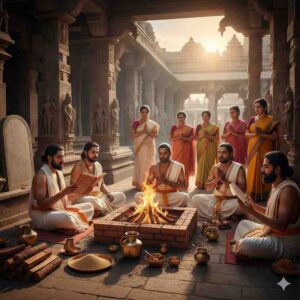
- Sacred Spaces: Temples serve as physical representations of the universe, with their architecture designed to facilitate spiritual elevation.
- The Role of Rituals: From circumambulating the deity (pradakshina) to ringing the temple bell, each act within the temple is purposeful, fostering a sense of devotion and community.
- Modern Adaptations: With the advent of digital technology, virtual temple visits and live-streamed rituals are becoming increasingly popular, allowing global devotees to participate from afar.
4. Festivals: Rituals that Unite Communities
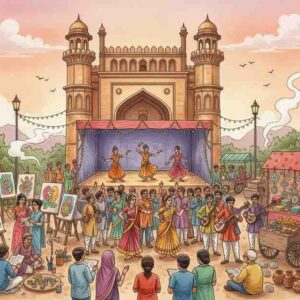
- Shared Celebrations: Festivals like Diwali, Navratri, and Pongal are marked by collective rituals, including lighting lamps, fasting, and storytelling. These acts transcend individual devotion, fostering community and cultural bonding.
- Symbolism of Festivities: Each festival ritual narrates a story, such as the lighting of lamps during Diwali to commemorate the return of Lord Rama, emphasizing hope, renewal, and victory.
- Sustainability in Rituals: Recent efforts have focused on eco-friendly celebrations, such as biodegradable Ganesh idols, reflecting Hinduism’s intrinsic respect for nature.
5. The Role of Chanting and Mantras
- Power of Sound: Chanting mantras like Om or the Gayatri Mantra creates vibrational energy, fostering mental clarity and spiritual focus.
- Scientific Backing: Research has shown that mantra chanting reduces stress and promotes a meditative state, bridging ancient practices with modern wellness.
6. The Evolution of Rituals in Modern Times
- Adapting to Change: While traditional rituals remain central, modern Hindus are finding ways to integrate them into contemporary lifestyles. Shortened ceremonies and simplified practices ensure relevance without losing sanctity.
- Digital Worship: Virtual platforms now enable rituals like online pujas, extending the reach of Hindu worship across geographical boundaries.
Conclusion: Rituals as Timeless Expressions of Faith
Hindu rituals are far more than religious acts; they are profound expressions of faith, culture, and spirituality. Whether performed in the sanctity of a temple, the intimacy of a home, or through digital platforms, these rituals provide a path for self-reflection, connection with the divine, and preservation of heritage.
As the world evolves, the rituals we cherish remain a testament to Hinduism’s adaptability and enduring relevance. By understanding their deeper meanings, we honor the heart of Hindu worship and carry forward a tradition that inspires devotion, unity, and spiritual growth across generations.