



Dubai, March 11, 2026 — The maritime confrontation in the Gulf has reached a critical flashpoint. Within a span of just a few hours, three cargo vessels were struck by unidentified projectiles in and around the Strait of Hormuz, forcing crews to abandon ship and reigniting fears of a global energy catastrophe.
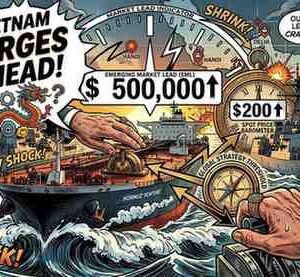
The attacks follow an explicit warning from Iran’s new leadership, daring President Donald Trump to continue his military campaign while predicting that the “price of this game” will be oil prices soaring above $200 per barrel.
Coordinated Chaos: Three Ships in One Night
The first incident occurred 25 nautical miles off the coast of Ras Al Khaimah, where an unidentified projectile slammed into a cargo vessel, triggering a massive deck fire. Shortly after, a second container ship reported structural damage from a separate strike, while a third vessel issued a distress call as it drifted toward the UAE coastline.
Fortunately, maritime officials confirmed that all crew members from the damaged vessels were rescued safely. However, the precision of the strikes suggests a coordinated effort to prove that despite U.S. naval presence, the world’s most vital oil choke point remains highly vulnerable.
The $200 Dare: Mojtaba vs. Trump
In a pointed online response, Iran’s Supreme Leader Mojtaba Khamenei mocked the U.S. administration, questioning if Washington has the stomach for the economic fallout of its “Operation Epic Fury”. “If you can tolerate oil prices above $200 per barrel, continue this game,” Khamenei warned, asserting that Iran’s offensive capabilities remain intact despite U.S. claims.
Trump’s Response: ‘Hostage-Taking’ Won’t Work
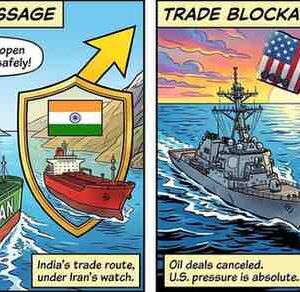
President Trump remained defiant, characterizing the attacks as the desperate acts of a “terrorist regime” attempting to hold the global economy hostage. He emphasized that the U.S. Navy is prepared to escort tankers and utilize advanced minesweeping technology to keep the straits flowing.
To stabilize global markets, Trump revealed a multi-pronged strategy:
- Alternative Partnerships: Touting a new partnership with Venezuela as a massive alternative source of energy.
- Sanction Waivers: Temporarily lifting oil sanctions on other nations to flood the market and drive prices down.
- Naval Deterrence: Warning that any further interference will result in Iranian targets being hit at a “level they have not seen before”.
Bottom Line
The Strait of Hormuz has transformed from a commercial gateway into a high-stakes arena for a “war of wills.” While President Trump promises that “Operation Epic Fury” will eventually lower energy prices by neutralizing the Iranian threat, the immediate reality for the shipping industry is one of fire, risk, and an unpredictable $200-a-barrel future.