

GENEVA, February 27, 2026 — In what is being hailed as a potential turning point for Middle Eastern diplomacy, Iran’s Foreign Minister has announced “significant progress” following the most intensive and prolonged round of indirect negotiations with the United States to date.
The talks, held in Geneva, stretched over several hours and involved high-level mediation from Oman and the International Atomic Energy Agency (IAEA), signaling a newfound seriousness from both Washington and Tehran to reach a negotiated solution.
Breaking the Deadlock: 6 Hours of Intensive Dialogue
The negotiations were marked by two grueling sessions: a four-hour morning meeting followed by a two-hour evening discussion. While the talks remained indirect, Oman’s Foreign Minister, Sayyid Badr Albusaidi, and IAEA Director General Rafael Grossi acted as the primary conduits for messages between the two delegations.
Foreign Minister Abbas Araghchi noted that while differences of opinion naturally remain, the atmosphere has shifted. “Perhaps there was more seriousness on both sides than before,” he stated, highlighting that the talks delved into the “key elements” of a potential agreement covering both nuclear commitments and the lifting of economic sanctions.
From Politics to Technical Frameworks
A major outcome of the Geneva summit is the transition from political rhetoric to technical assessments. Starting Monday, expert teams will convene in Vienna to begin detailed work with the assistance of the IAEA.
The goal of these sessions is to bring complex technical issues into a framework that aligns with the political demands of both nations. This move into “detailed expert-level discussions” is seen by analysts as a concrete sign that both sides are moving past symbolic gestures toward a functional roadmap.
The Sanctions Hurdle
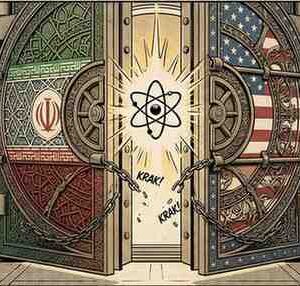
A central pillar of the discussions remains the relief of unilateral American sanctions. Foreign Minister Araghchi emphasized that Iran has clearly stated its expectations regarding the dimensions of sanctions relief and the necessary steps within the UN Security Council.
Oman’s Albusaidi echoed this optimism, confirming via social media that “very good progress” had been made specifically in the area of sanctions relief, providing hope for an economy long stifled by international restrictions.
The Road to the Fourth Round
The momentum is set to continue with a fourth round of negotiations scheduled to take place within the next week. In the interim, officials from both capitals will spend the coming days preparing essential documents and holding internal consultations to finalize their positions.
Bottom Line
The Geneva talks have successfully moved the needle from “if” to “how.” By engaging the IAEA for technical framing and setting a rapid timeline for the next round, the U.S. and Iran have entered their most serious diplomatic phase in years. The world now watches Vienna to see if technical experts can bridge the gap that politicians have struggled with for a decade.