
New York City – 2025
In the heart of Queens, amid the hum of subways and skyline silhouettes, a bold new chapter in American filmmaking has taken root.Wildflower Studios, a state-of-the-art vertical film production facility backed by legendary actorRobert De Niro, has officially opened its doors in Astoria—marking one of the most ambitious urban studio developments in recent memory.
Described by insiders as“Hollywood in a high-rise”, Wildflower Studios is not just another production space—it’s a signal. A signal that New York is ready tocompete with Atlanta, Los Angeles, and Londonfor the future of big-budget and boutique filmmaking.
A Studio Designed for the Sky
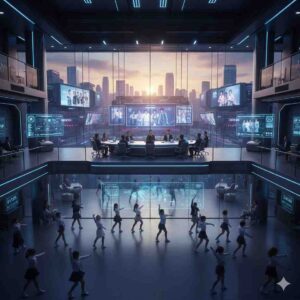
Unlike traditional backlot behemoths spread across sprawling campuses, Wildflower has gone vertical. The building’s design—conceived by architect Bjarke Ingels—stacks sound stages, editing bays, virtual production rooms, and post-production floors into a streamlined cinematic tower.
The studio boasts:
- 11 full-service soundstages, optimized for everything from indie dramas to multi-camera television
- Dedicated facilities for LED volume stages, enabling cutting-edge virtual production
- Post-production suites equipped with real-time color grading and Dolby Atmos mixing
- Rooftop green screens and drone-compatible flight zones for aerial filming
De Niro’s Vision for New York Cinema
Speaking at the ribbon-cutting ceremony, De Niro emphasized the project’s cultural and personal significance:
“I’ve always believed New York stories need to be told in New York. This studio is about bringing film back to its roots—and pushing it forward at the same time.”
De Niro, alongside business partner Jane Rosenthal, has championed New York’s film ecosystem through theTribeca Film Festival, and now with Wildflower, he aims toanchor a new era of high-tech, locally-driven storytelling.
Economic and Cultural Impact
Wildflower is expected to generateover 1,000 full-time jobsand serve as a year-round base for productions looking to capture the grit, glamour, and diversity of New York without leaving its five boroughs.
The city’s film commissioner praised the launch, noting thatfilm tax incentives combined with Wildflower’s innovationcould reverse the production drain to other states and countries.
Already, major projects are in negotiation to begin filming in 2025, including two streaming originals, a mid-budget A24 feature, and a rumored biopic backed by Apple Studios.
Reinventing Urban Production
What sets Wildflower apart isn’t just its location or layout—it’s itsphilosophy. It aims to be:
- Environmentally sustainable, with solar energy and waste-reduction protocols
- Equitable, committing to diverse hiring across gender, race, and union lines
- Open to emerging talent, with planned workshops, residency programs, and student collaborations with local film schools
Final Word
In an age where virtual backdrops and AI-generated visuals dominate headlines,Wildflower Studiosis a powerful reminder thatreal cities, real spaces, and real stories still matter.
And in Robert De Niro’s city—the city that made him—Wildflower is more than a studio.
It’s a love letter tocraft, community, and cinematic future-building from the ground (or rooftop) up.