

New Delhi, February 2026 — In a major move to solidify India’s position as a global tech leader, OpenAI has announced a sweeping series of partnerships with the nation’s most prestigious institutions, including AIIMS New Delhi, IIT Delhi, and IIM Ahmedabad.
The initiative marks a fundamental shift in the Indian education system, moving Artificial Intelligence from a specialized elective to a core, daily academic tool.
Preparing for the 2030 Skill Shift
The urgency behind this collaboration is driven by data: studies suggest that nearly 40% of today’s core workforce skills will need to change by 2030 due to AI integration.
OpenAI’s strategy focuses on “AI Literacy,” providing students and faculty with enterprise-grade access to ChatGPT Edu. This isn’t just about providing a chatbot; it involves embedding AI into everyday workflows—ranging from analytics and coding simulations to advanced research and campus-wide hackathons.
Medical Excellence and Engineering Innovation
The partnerships are highly specialized to suit the mission of each institution:
- AIIMS New Delhi: The collaboration will explore applied AI in clinical training and medical education. A proposed “AI in Medical Education Hub” aims to set ethical benchmarks, ensuring AI acts as a co-pilot to enhance clinical judgment and patient outcomes.
- IIT Delhi: The focus remains on engineering innovation and systems design. AI tools will be integrated into applied problem-solving, helping students navigate complex architectural and coding challenges.
- Broad Academic Integration: Institutions like the Manipal Academy of Higher Education, UPES, and Pearl Academy will also see AI woven into curricula spanning law, business, and the creative arts.
Democratizing AI via EdTech
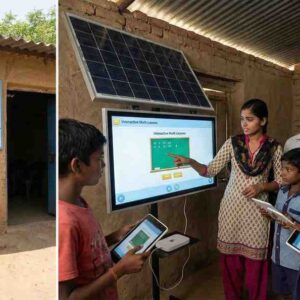
Recognizing that the talent gap exists beyond the campus, OpenAI is extending its reach through major Indian EdTech players. Partnerships with Physics Wallah, UpGrad, and Guvi are designed to launch structured AI training for early-career professionals and students in remote areas. This ensures that the transition to an AI-ready workforce is not restricted to elite urban centers but is democratized across the country.
A New Learning Ecosystem
By placing AI at the heart of the learning process, the initiative aims to move past the “hype” and into practical application. The goal is to create a workforce that doesn’t just “use” AI, but understands the ethical frameworks and prompt engineering required to lead in a global market.
Bottom Line
The OpenAI collaboration is a preemptive strike against workforce obsolescence. By turning India’s premier colleges into AI laboratories, the government and industry are ensuring that the next generation of Indian doctors, engineers, and managers are not just AI-aware, but AI-fluent. In the race to 2030, the classroom has become the new frontline.