


New Delhi, September 2026 — A recent analysis by Brut India highlights the evolving and complex body language between Prime Minister Narendra Modi and Chinese President Xi Jinping. While the two leaders appear to have somewhat warmed up since their tense interactions following the 2020 Galwan Valley clashes, the geopolitical frost between India and China has not entirely thawed. Their recent meetings underscore a delicate dance of diplomacy, heavily weighed down by unresolved border disputes and growing trade imbalances.
The Cold Start: Stiff Body Language in 2023 The relationship hit a historic low after the Galwan Valley clash in Ladakh, where 20 Indian and at least four Chinese soldiers were killed. The tension was palpable at the 2023 BRICS Summit in South Africa. The leaders’ body language was notably stiff and cold; Jinping was seen looking in the opposite direction from Modi, and they barely made eye contact before breaking away. This followed a period of intense military deployment, border skirmishes in Arunachal Pradesh, and India’s swift ban on Chinese apps like TikTok. At the time, India’s Foreign Secretary maintained that peace and tranquility at the LAC were essential for any normalization.
A Shift in Tone: Smiling through the SCO and BRICS 2024-25 The dynamic began to visibly shift by 2024 and 2025. At the 2024 BRICS Summit in Russia, the two leaders appeared in better spirits. Although Jinping seemed to miss Modi’s extended hand initially, they eventually shook hands while posing for pictures and even held a proper bilateral meeting. This thaw followed a crucial agreement on LAC patrolling arrangements, ending the Galwan deadlock. By the 2025 SCO Summit in China—a meeting that went viral for a humorous exchange involving Russian President Vladimir Putin—Modi noted that the relationship had moved in a “positive direction” and that the border situation was peaceful and stable.
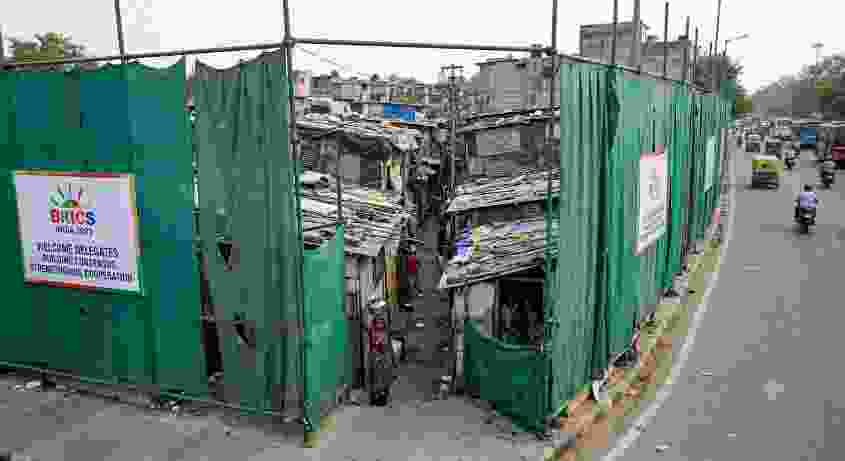
The Delhi Visit: Handshakes with Underlying Tension The most recent highlight was President Xi’s visit to New Delhi for the 2026 BRICS Summit—his first visit to India in seven years. The distance between the leaders seemed to have significantly reduced as they held hands for the family photo, a stark contrast to their 2023 encounter. Yet, this visible camaraderie does not erase the systemic issues at play.
Bottom Line The public handshakes and smiles between Modi and Xi represent a significant diplomatic de-escalation, but they mask an underlying tension that hasn’t disappeared. Despite the improved optics and recent LAC patrolling agreements, India and China continue to share a 3,488 km unresolved boundary. Furthermore, the economic reality remains a sticking point: India’s trade deficit with China has more than doubled between FY 2020-21 and 2025-26. The leaders may have “moved on” for the cameras, but the core structural challenges of the India-China relationship remain as complex as ever.