


Faith and Tradition: The Interplay Between Belief and Cultural Heritage in India
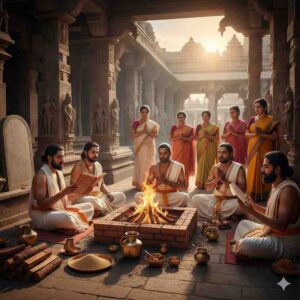
In a quiet temple courtyard in Tamil Nadu, devotees gather for theaarti. The sound of bells rings through the air as a young girl, adorned with jasmine flowers, balances a brass lamp during the ritual. Nearby, a scholar recites verses from the Vedas. While the doctrine of the ritual is rooted in ancient scriptures, the cultural flourishes—such as the jasmine, the local chants, and the regional attire—are distinctly Tamil. It is in this interplay of culture and doctrine that faith often takes its most tangible form.
In a diverse country like India, where every region boasts its own distinct traditions, the question arises: Is our understanding of faith shaped more by cultural practices than by religious doctrine?
The Influence of Culture on Faith
India’s religious practices often reflect a blend of scriptural guidance and local customs, with culture playing a significant role in how beliefs are expressed:
- Regional Practices: The same festival can vary dramatically depending on where it is celebrated. For example, Diwali, rooted in Hindu scripture, is celebrated as a festival of lights in the north, while in Tamil Nadu, it is observed as Naraka Chaturdashi with unique customs.
- Caste and Community Norms: Despite religious teachings that emphasize equality, cultural systems like caste hierarchies continue to shape the practice of faith in many communities, often overriding doctrinal principles.
- Language and Interpretation: With scriptures translated into multiple languages and interpreted through local idioms, cultural nuances inevitably influence how religious doctrines are understood and followed.
Faith Beyond Doctrine
Many Indians interact with their faith primarily through cultural rituals rather than doctrinal study. According to a 2023Pew Research Centerreport, over 70% of Indians identify as deeply religious, but only a minority regularly engage with scriptures or attend formal religious teachings. Instead, festivals, familial traditions, and community rituals form the backbone of their spiritual lives.
- Family as Faith’s Teacher: Most Indians inherit their understanding of faith from family practices rather than religious institutions. A child lighting a diya or fasting during Ramadan learns more about cultural expressions of faith than theological reasoning.
- Art and Architecture: The vibrant murals of Ajanta, the intricate carvings of temples in Khajuraho, and the grandeur of the Jama Masjid are as much expressions of cultural identity as they are reflections of religious belief.
Recent Trends: Shifts in Faith and Culture
Modernization and globalization are further blurring the lines between culture and doctrine:
- Commercialization of Festivals: Once rooted in spiritual significance, festivals like Holi and Christmas are increasingly commercialized, focusing on cultural celebration rather than doctrinal adherence.
- Interfaith and Global Influences: Exposure to global ideas has introduced Indians to new philosophies, often leading to a fusion of cultural and spiritual practices. Yoga, for instance, has transitioned from its Vedic roots into a global wellness practice.
- Digitalization of Faith: Apps and virtual platforms offer simplified versions of rituals, often stripping away the regional cultural nuances that make Indian spirituality so diverse.
Challenges in Balancing Culture and Doctrine
While cultural influences enrich faith, they can also lead to distortions of religious teachings:
- Superstition and Misinterpretation: Cultural practices sometimes stray from doctrinal teachings, leading to superstitions that may overshadow the core values of a religion.
- Loss of Authenticity: The blending of cultural and doctrinal elements can dilute religious identity, making it harder to distinguish between spiritual essence and societal tradition.
Voices from the Ground
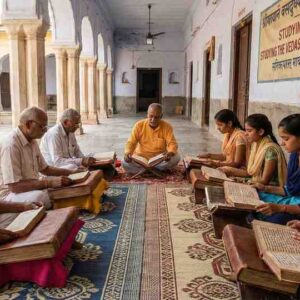
A recent initiative in Varanasi sought to teach young Brahmins the original Sanskrit meanings of Vedic chants. The project’s leader, Dr. Rajesh Sharma, observed: “Most of our youth understand rituals as inherited acts but don’t know their meanings. Culture sustains faith, but doctrine gives it depth. We need both to coexist.”
Similarly, interfaith communities in Kerala have emphasized the importance of dialogue between cultural and doctrinal understandings of faith. Their collaborative events, such as joint festivals and shared prayers, showcase how cultural traditions can bridge gaps between differing religious doctrines.
The Path Forward: Bridging Culture and Doctrine
For faith to remain relevant and meaningful, it must strike a balance between cultural expressions and doctrinal principles:
- Education: Programs that teach the philosophical underpinnings of religious practices can help individuals connect with the deeper meaning of their rituals.
- Community Engagement: Encouraging dialogue within and between communities about the role of culture in faith can foster greater understanding and inclusivity.
- Preserving Local Traditions: Supporting regional art forms, music, and literature tied to faith ensures that cultural expressions continue to enrich spirituality.
Conclusion: A Symbiotic Relationship
In India, faith is inseparable from culture, and each enhances the other in profound ways. While doctrine provides a moral and philosophical framework, culture brings faith to life, making it accessible and relatable to everyday people.
The challenge lies in ensuring that this relationship remains symbiotic rather than adversarial. By valuing both, India can continue to celebrate its unparalleled spiritual diversity while preserving the essence of its religious traditions. As Dr. Sharma aptly puts it: “Culture makes faith vibrant, but doctrine keeps it grounded. One without the other is like a lamp without oil.”