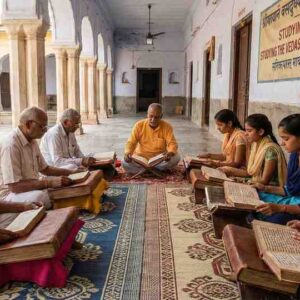




Exploring the Growing Commercialization of Education in India
Introduction: The Rise of Private Schools and the Business Debate
Over the past few decades, the landscape of education in India has shifted dramatically. Once primarily a public sector responsibility, education has increasingly become a lucrative business venture, with the proliferation of private schools across urban and rural areas. While private schools are often hailed for offering better infrastructure, personalized attention, and higher academic standards, they are also criticized for their commercialization of education. This article explores whether education is turning into a business, examining the impact of private schools on India’s educational system.
1. The Growth of Private Schools in India
A Shift from Public to Private
- Over the last 20 years, the number of private schools in India has increased significantly. As of the latest data from the Ministry of Education, over 30% of India’s school-going children are enrolled in private institutions, a figure that has grown rapidly in the past decade. This shift is largely driven by the perception that private schools offer better quality education than government-run schools.
- Market Trends: The private school sector has seen massive investments, with international and local players setting up high-end schools in metro cities, as well as affordable options in tier-2 and tier-3 cities. The private education market in India is expected to reach $70 billion by 2022, according to research by KPMG.
The Appeal of Private Schools
- Parents often opt for private schools due to better infrastructure, modern teaching methodologies, English-medium instruction, and extracurricular opportunities. Schools offering CBSE, ICSE, and international curricula are especially popular among those seeking high-quality education for their children.
- Statistical Insight: A survey by the National Sample Survey Office (NSSO) revealed that 44% of urban children attend private schools, with 62% of parents citing a “better quality of education” as the primary reason for this choice.
2. The Commercialization Debate
Rising Tuition Fees and Hidden Costs
- One of the main criticisms of private schools is the rising cost of education. With many private institutions charging high tuition fees, often supplemented by additional costs for uniforms, extracurricular activities, and textbooks, education is becoming a significant financial burden on families.
- Parental Concerns: According to a 2020 report by the All India Parents Association, private school fees have increased by 40-50% over the last five years, with some elite schools charging upwards of ₹2 lakh per year in tuition fees. This growing expense has led to accusations that education is being treated as a commodity rather than a fundamental right.
Profit Motive vs. Educational Quality
- Critics argue that many private schools prioritize profit over education, using student fees to line their pockets rather than invest in better teaching and infrastructure. This trend has led to an uneven quality of education, with elite schools offering world-class facilities, while lower-cost private institutions cut corners to maximize profits.
- Data Insight: A report by the Comptroller and Auditor General (CAG) found that a significant portion of private school revenue is spent on administrative costs and profit margins, rather than reinvested into educational quality or teacher development.
3. The Impact on Public Education
The Growing Gap Between Public and Private Education
- As private schools continue to grow in number and popularity, government schools are left struggling with inadequate funding, outdated infrastructure, and overcrowded classrooms. This widening gap is a major concern for equity in education.
- Government Data: According to the Ministry of Education, the number of students in government schools has decreased by 15% over the past decade, with private schools gaining the lion’s share of new enrollments. This shift has left many government schools underfunded and underserved.
The Need for Reform in Public Schools
- In response to the rise of private schools, there have been calls for reform in the public education sector. The government has initiated programs such as the Samagra Shiksha Abhiyan and Right to Education (RTE) Act, aiming to improve the quality of public education. However, critics argue that these reforms are insufficient and fail to address the root cause: the lure of private school facilities and perceived better education.
4. The Future of Education: A Balancing Act
Regulation of Private Schools
- As the debate about commercialization intensifies, some experts argue that stricter regulations and policies are needed to curb the excessive profiteering in the education sector. This includes transparency in fee structures, mandatory audits, and greater accountability for educational outcomes.
- Policy Insight: The National Education Policy (NEP) 2020 addresses some of these concerns by recommending the regulation of private schools and emphasizing the need for equitable access to quality education for all. However, critics argue that without proper implementation, these measures may have little effect.
Integrating Quality and Accessibility
- For the future of education in India, there is a pressing need to balance the strengths of private institutions, such as innovation and infrastructure, with the need for accessibility and affordability for all students. Integrating technology, improving public schools, and making education more inclusive are key to ensuring that commercialization does not undermine the broader goals of education.
- Global Trends: Globally, countries like Finland have managed to combine high-quality education with equality, ensuring that private schooling is not a necessity but a choice. India’s education system could learn valuable lessons from such models.
Conclusion: Education as a Right, Not a Business
The debate over the commercialization of education in India is complex, with valid arguments on both sides. While private schools undeniably offer many advantages, the increasing costs and profit-driven motives have raised concerns about equity and quality. For India to build a robust, fair, and inclusive education system, the government must ensure that education remains a fundamental right and not just a commodity for the wealthy. By striking a balance between private innovation and public responsibility, India can create a system where education serves all, not just those who can afford it.