

NEW DELHI, March 2026 — In two major developments for India’s energy security, Iran has announced that the strategic Strait of Hormuz remains open for Indian vessels, while the United States has issued a temporary 30-day waiver allowing Indian refiners to process specific Russian oil shipments. These moves come amid heightened regional tensions and a volatile global energy market.
The Strategic Lifeline: Strait of Hormuz
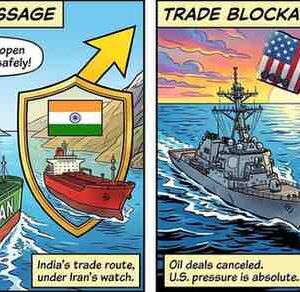
The Islamic Revolutionary Guard Corps (IRGC) clarified that while the Strait of Hormuz—the world’s most critical oil chokepoint—is closed to “Western countries” including the U.S., Israel, and Europe, it remains operational for non-Western nations like India and China.
The Strait is a vital artery for global energy, with approximately 20-21 million barrels of oil passing through it daily, representing 20% of global consumption. For India, this “oil hope” ensures the continued flow of crude and Liquefied Natural Gas (LNG) from key suppliers like Iraq, Saudi Arabia, and Qatar. Analysts suggest Iran’s strategy aims to exert economic pressure on the West while driving a wedge between Western and Asian interests.
U.S. 30-Day Waiver on Russian Oil
Simultaneously, the U.S. Treasury Department has granted Indian refiners a 30-day temporary waiver to complete transactions for Russian oil. However, this waiver is strictly limited to oil shipments already in international waters that were stalled due to sanctions and insurance restrictions. It does not permit new purchase orders.
Following this announcement, shares of major Indian refiners like Reliance Industries saw a positive uptick. While the U.S. administration suggests India has significantly reduced its Russian oil intake, Indian reports indicate that while imports have dipped from their 40% peak in 2024, the strategic partnership continues.
Divided Geopolitics and Energy Interests
The announcements highlight a complex tug-of-war. Iran’s decision to keep the Strait open for India avoids a total blockade that would cripple its own export earnings and alienate its biggest buyers like China. On the other hand, the U.S. waiver is seen by some as a pragmatic move to prevent global oil prices from spiking.
Domestic critics in India have questioned the U.S. involvement, with opposition parties asking why a foreign power should dictate India’s trade terms with Russia. India maintains that its energy policy is governed purely by its strategic interests, given that the country imports nearly 85% of its crude oil requirements.
Bottom Line
These developments highlight India’s delicate balancing act in a multipolar world. By securing safe passage through the Strait of Hormuz and navigating U.S. sanctions via temporary waivers, New Delhi continues to prioritize its national energy interests despite escalating geopolitical friction between the West and the “Axis of Resistance”.