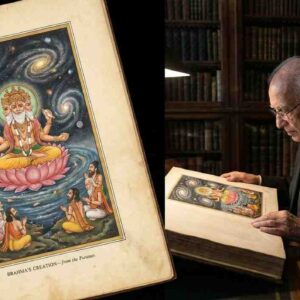

“Foundations of Thought: The Vedic Roots of Hindu Philosophies”
Hindu philosophies—such as Vedanta, Yoga, Samkhya, and Mimamsa—are deeply intertwined with the Vedic teachings, drawing their foundational principles from the Vedas while evolving distinct interpretations over time. The Vedas, composed between 1500 BCE and 500 BCE, are revered asshruti(divinely revealed knowledge) and serve as the wellspring of spiritual, ethical, and cosmological insights that have shaped Hindu thought for millennia.
Core Intersections Between Vedic Teachings and Hindu Philosophies
- The Concept of Ultimate Reality (Brahman) and the Self (Atman):
- The Upanishads, the philosophical sections of the Vedas, explore the unity of Brahman (universal reality) and Atman (individual self), forming the foundation of Vedanta.
- Vedanta emphasizes self-realization as the key to liberation (moksha), a concept rooted in Vedic metaphysics.
- Karma and Dharma:
- The Vedas introduce the law of action (karma) and cosmic order (rita), which evolve into the moral framework of dharma in Hindu philosophies.
- Mimamsa expands on Vedic rituals, interpreting them as means to uphold dharma and ensure cosmic harmony.
- The Path to Liberation (Moksha):
- Vedic teachings emphasize liberation through knowledge (jnana), devotion (bhakti), and disciplined action (karma). These paths are elaborated in Yoga (practical discipline) and Samkhya (theoretical framework of dualism).
- Meditation and Mindfulness:
- Practices like mantra chanting and meditation, emphasized in the Vedas, underpin Yoga philosophy, which systematizes them into a framework for spiritual and mental well-being.
Critical Evolution and Divergence
While rooted in Vedic teachings, Hindu philosophies often reinterpret or expand upon these principles:
- Ritual vs. Knowledge: Mimamsa prioritizes Vedic rituals, while Vedanta shifts focus to transcendental knowledge.
- Monism vs. Dualism: The Upanishads’ monistic view of reality is contrasted by Samkhya’s dualistic perspective of purusha (consciousness) and prakriti (matter).
Conclusion
Hindu philosophies, though diverse in their interpretations, are united by their foundational reliance on Vedic teachings. The Vedas provide a shared framework of spiritual inquiry and ethical principles, making them the enduring bedrock of Hindu thought. Their dynamic reinterpretation across philosophical schools exemplifies Hinduism’s adaptability and intellectual richness.