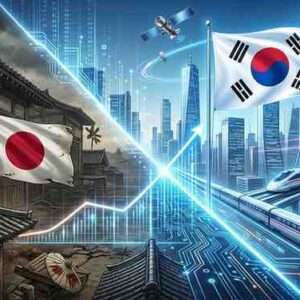

SEOUL, March 2026 — Over the last century, South Korea has undergone one of the most dramatic transformations in modern history. Once a colonized territory that struggled to even exist on a map, it has evolved into a global technology powerhouse, recently overtaking Japan in GDP per capita and establishing a cultural wave that dominates global media.
The “Miracle on the Han River”
Following 35 years of Japanese exploitation and the devastating Korean War (1950–53), South Korea was one of the poorest nations on Earth, with a GDP per capita lower than that of Kenya. The nation’s survival was initially dependent on U.S. aid, but a shift toward a military-led, export-oriented model in the 1960s sparked a period of “compressed industrialization”.
Under General Park Chung-hee, the state adopted a “developmental state” model. This involved:
- Export-Led Growth: Prioritizing selling products to the world rather than focusing on internal consumption.
- The Rise of Chaebols: Supporting family-run conglomerates like Samsung, Hyundai, and LG with cheap loans and tax breaks in exchange for ruthless export performance.
- Technological Evolution: Transitioning from agriculture and textiles to heavy industry, electronics, and eventually high-tech sectors like semiconductors and shipbuilding.
Human Capital as the Engine
Central to South Korea’s success was its “obsessive” focus on human capital. The nation built a vast base of engineers and technicians through an intense educational culture designed to absorb, redesign, and eventually export imported technologies. Today, South Korean companies contribute significantly to global R&D, outspending many of the world’s largest economies.
The creation of a world-class digital backbone—boasting the world’s fastest internet and being among the first to roll out 5G—has paved the way for new sectors like online gaming, fintech, and digital content.
Lessons for the Indian Economy
India and South Korea share a historical bond; India played a pivotal role in resolving the Korean War through the Neutral Nations Repatriation Commission. Today, experts suggest India can adopt key elements from the South Korean “playbook”:
- Consistent Economic Modeling: Maintaining directional consistency in economic policy, regardless of whether a government is an autocracy or a democracy.
- R&D Over Cheap Labor: Moving beyond low labor costs to focus on innovation and high-value manufacturing.
- Crisis-Driven Reform: Utilizing economic shocks as opportunities for structural reform, much as South Korea did during the 1997 Asian Financial Crisis.
Bottom Line
South Korea’s journey from a war-torn region to a high-income powerhouse is a testament to the power of state-backed industrial strategy and human capital investment. While challenges like an aging population and conglomerate dominance remain, the nation continues to project its influence through both tangible technology and the global “Korean Wave” (Hallyu).