



“Ancient Wisdom Misunderstood? Decoding the True Essence of Vedic Teachings”
The Vedas, the foundational texts of Hindu philosophy, are revered as reservoirs of timeless wisdom. They offer profound insights into the nature of existence, the self (Atman), the cosmos (Brahman), and the interplay of actions (Karma) and duties (Dharma). Yet, in today’s world, where traditions often blend with modern interpretations, there’s a pressing question: Are we truly understanding the depth of Vedic philosophy, or are we trapped in its misinterpretation?
The Core Tenets of Vedic Philosophy
The Vedas, composed between 1500 BCE and 500 BCE, are more than religious texts; they are an exploration of the human condition and the universe. Their teachings center on:
- Self-Realization: The journey to recognize the unity between Atman (individual soul) and Brahman (universal consciousness).
- Karma and Dharma: The principle of cause and effect guiding moral action and duty.
- Cosmic Harmony: Living in accordance with Rita—the natural order of the universe.
These ideas were meant to inspire personal growth, harmony with nature, and an evolving understanding of life.
The Pitfalls of Misinterpretation
- Ritual Over Meaning:
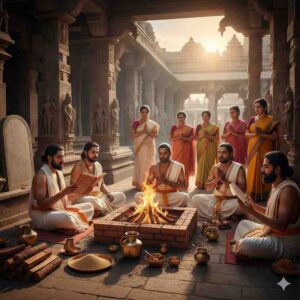
- Over centuries, many have come to view the Vedas primarily as ritualistic texts, focusing on the outward ceremonies rather than their symbolic and philosophical meanings. For example, yajnas (sacrificial rites) were originally designed to signify the surrender of ego and material attachment. Today, they are often performed as mere customs, detached from their deeper intent.
- Cultural Biases:
- Historical and cultural contexts have distorted Vedic principles. The caste system, for instance, was a fluid occupational framework in the Vedic age, but over time, it became a rigid social hierarchy, contradicting the Vedic ethos of equality and personal growth.
- Over-Simplification in Modern Narratives:
- Modern interpretations frequently reduce Vedic teachings to general spiritual clichés, diluting their depth. Concepts like Karma are often oversimplified into “good deeds yield good results,” ignoring its broader implications on intention, duty, and cosmic balance.
Reclaiming the True Essence of Vedic Teachings
- Philosophy Beyond Rituals:
- Vedic philosophy emphasizes introspection and self-inquiry. By exploring texts like the Upanishads, individuals can engage with the transformative ideas of the unity of existence and the pursuit of ultimate truth (Moksha).
- A Balanced Perspective:
- Instead of solely focusing on rituals or dismissing them entirely, a balance must be struck. Rituals, when understood in their original context, serve as tools to align the individual with the universe.
- Education and Interpretation:
- Accurate translations and accessible interpretations are essential. Initiatives like the Digital Veda Library and academic programs worldwide are crucial in bridging the gap between ancient teachings and modern understanding.
The Way Forward
The Vedas are not static relics; they are dynamic guides meant to be questioned, interpreted, and applied to evolving contexts. The essence of Vedic philosophy lies in its universality—it encourages inquiry, self-awareness, and harmony with the world.
To honor the Vedas, we must move beyond superficial interpretations, embracing their depth and complexity. Misinterpreted, they risk becoming hollow traditions; understood, they remain a beacon of wisdom for personal and societal transformation. Are we ready to see them in their true light? The answer lies in how deeply we engage with their timeless truths.