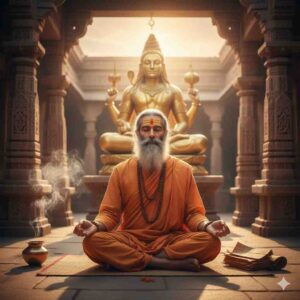




The Eternal Canvas: Why the Vedas Resist Finality
Imagine a vast, cosmic library—every word alive, every verse a doorway. That is the essence of the Vedas, the ancient Sanskrit scriptures said to be the foundation of India’s spiritual and philosophical traditions. Unlike fixed doctrines, the Vedas invite their readers to explore, question, and reinterpret. But this fluidity raises a fascinating debate: are the Vedas an eternal truth carved in stone, or a living, evolving guide meant to adapt with the times?
Dual Faces of the Vedas: Mysticism or Manual?
Picture a flame. For some, it’s a source of light, for others, a sacred offering. The Vedas are much like that flame. TheRigvedainspires wonder, with hymns that paint the cosmos as an infinite mystery, while theYajurvedafocuses on precise rituals to harness divine energies. This duality—philosophical and procedural—has shaped centuries of discourse. Are the Vedas a map to metaphysical truths, or a handbook for rituals? The answer may depend on the seeker’s lens, adding layers to an already complex narrative.
The Kaleidoscope of Culture: Regional Reinterpretations
Imagine a melody played on different instruments across the world—each rendering unique but familiar. The Vedas, as they traveled through regions and eras, evolved similarly. In the devotional movements of South India, Vedic wisdom transformed into heartfelt hymns, stripping away rigid hierarchies for the sake of accessibility. Meanwhile, in northern traditions, ritualistic exactness often took precedence. This cultural remixing adds vibrancy but also stirs debates about authenticity. Are these reinterpretations enriching the tradition or diluting it?
Sanskrit: The Gatekeeper of Secrets?
The Vedas speak in the rhythm of ancient Sanskrit, a language that is as poetic as it is enigmatic. Each word holds layers of meaning, and each verse invites endless decoding. For the initiated, the language is a treasure chest; for others, a daunting wall. While purists insist that only those trained in Sanskrit can truly grasp the Vedas, modern thinkers argue that translations and intuitive interpretations democratize access, making their wisdom universal. But does something vital get lost when we break the rhythm of the original words?
Science, Spirituality, or Political Tool?
Fast forward to today. The Vedas are no longer confined to temples and gurukuls; they are invoked in wellness retreats, space exploration theories, and even political rallies. References to Ayurveda and Vedic astronomy are celebrated as proof of ancient India’s scientific prowess. Yet, these same texts are sometimes wielded as cultural weapons in ideological battles. The Vedas’ adaptability is both their strength and their vulnerability. Are they a bridge to unity or a tool for division?
Who Holds the Key? Authority and Ownership
Here’s the catch: if the Vedas are open to interpretation, who gets to interpret them? Is it the privilege of Sanskrit scholars steeped in tradition, or can anyone—a curious mind, a poet, a scientist—find their own truth within the verses? This question fuels the most heated debates, as the lines between personal understanding and communal responsibility blur.
A Living, Breathing Tradition
At their heart, the Vedas are not relics trapped in a glass case. They are alive in every chant, every meditation, every questioning heart. They are not about finding definitive answers but engaging in an eternal dialogue. Their essence lies in their adaptability, proving that truth isn’t static—it evolves, just as we do.
The beauty of the Vedas lies in their contradictions. They are ancient yet modern, precise yet abstract, rigid yet fluid. They demand engagement, curiosity, and above all, the courage to interpret. In the end, the Vedas are less about what they say and more about how they make us think. And in that lies their timeless, undeniable magic.