
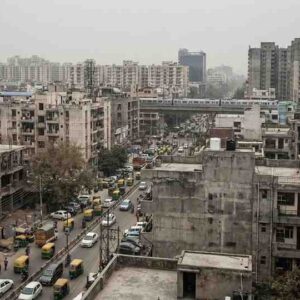



Agra, 2025– Known globally for its architectural marvel, the Taj Mahal, Agra now grapples with a crisis threatening its heritage and public health: pollution. Despite significant attention to urban development and tourism, the city’s escalating pollution levels have emerged as a silent killer, posing grave environmental and health risks.
The Scale of Pollution in Agra
According to theCentral Pollution Control Board (CPCB), Agra’s air quality remains in the “severe” category for 45% of the year, with PM2.5 levels frequently exceeding the National Ambient Air Quality Standards (NAAQS). A 2025 report from theUttar Pradesh Pollution Control Board (UPPCB)reveals that the average PM2.5 concentration in Agra stands at 120 µg/m³—three times the national safe limit of 40 µg/m³.
The Yamuna River, another critical resource, has not been spared. A 2025 assessment by theNational Green Tribunal (NGT)highlighted that 75% of the city’s untreated sewage and industrial effluents flow into the Yamuna, making it unsuitable for drinking, irrigation, or aquatic life.
The Impact on Public Health and Heritage
The health implications are staggering. A study by theIndian Council of Medical Research (ICMR)found that respiratory diseases, including chronic obstructive pulmonary disease (COPD) and asthma, have risen by 38% in Agra over the last decade. Similarly, long-term exposure to air pollution is linked to an 18% increase in cardiovascular diseases among residents.
The Taj Mahal, too, bears the brunt. TheArchaeological Survey of India (ASI)reported in 2025 that pollutants like sulfur dioxide and nitrogen oxide are accelerating the yellowing of the monument’s iconic white marble, despite efforts to control industrial emissions near the heritage site.
Efforts to Address the Crisis
The government has launched several initiatives, but challenges remain. TheNational Clean Air Programme (NCAP), which aims to reduce PM2.5 and PM10 levels by 20–30% by 2025, has yet to yield significant improvements in Agra. While theAgra Smart City Projectintroduced e-rickshaws and air quality monitoring stations, enforcement of pollution control measures remains inconsistent.
Industrial compliance is another area of concern. TheCPCB’s 2025 compliance reportrevealed that only 60% of the 300 registered industries in Agra adhere to emission norms, while many smaller units operate without proper licensing.
The Way Forward
Experts argue that tackling Agra’s pollution crisis requires a multi-pronged approach:
- Enhanced Regulation: Strict enforcement of industrial and vehicular emission standards.
- Water Management: Implementation of advanced sewage treatment plants (STPs) to protect the Yamuna.
- Green Initiatives: Expansion of urban green spaces to improve air quality.
- Community Awareness: Public campaigns to encourage eco-friendly practices and reduce waste.
Conclusion
Agra stands at a crossroads, torn between preserving its historical and cultural identity and addressing the environmental degradation threatening its future. The pollution crisis is not just an environmental issue but a public health emergency that requires immediate and sustained action. The question remains: Can Agra reclaim its legacy as a city of beauty and history, or will it succumb to the silent killer in its midst?
References:
- Central Pollution Control Board (CPCB), 2025
- Uttar Pradesh Pollution Control Board (UPPCB), 2025
- Indian Council of Medical Research (ICMR), 2025
- National Green Tribunal (NGT), 2025
- Archaeological Survey of India (ASI), 2025