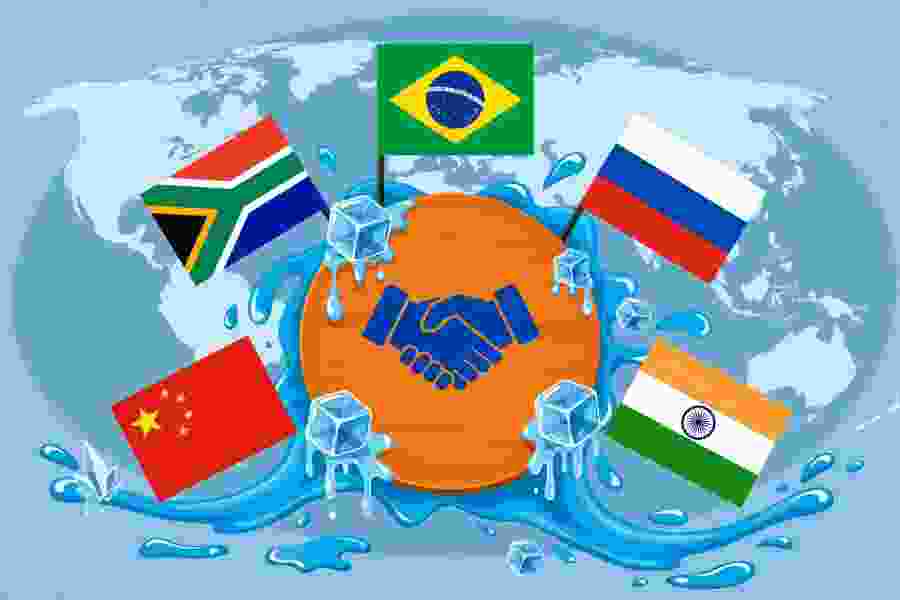



NEW DELHI — Chinese President Xi Jinping’s surprise arrival at the 18th BRICS Summit in New Delhi, followed by a high-profile bilateral meeting with Prime Minister Narendra Modi, has sparked widespread diplomatic discussions. Analysts view the engagement as far more than a routine handshake—serving distinct economic and strategic motives for both regional superpowers.
For India: Economic Stability and Strategic Signals
For New Delhi, sustaining the recent thaw in bilateral relations carries a dual objective:
- Domestic Economic Relief: Easing tension helps stabilize cross-border supply chains and trade dynamics critical for India’s continuous economic growth.
- Diplomatic Leverage: Hosting Xi and engaging constructively sends a clear signal to Washington that India maintains multiple strategic partnerships and the autonomy to balance global ties.
For China: A Message to Washington and Domestic Timing
Xi’s decision to attend the Delhi summit—notably after skipping India’s hosted G20 summit in 2023—is seen by experts as a calculated diplomatic move:
- Timing Ahead of U.S. Visit: Coming less than two weeks before Xi’s state visit to Washington D.C., the meeting serves as a broader geopolitical signal to the United States.
- Economic Pressures & Party Congress: With domestic economic hurdles at home and the 21st National Congress of the Chinese Communist Party approaching, Beijing requires stability on its western border while leveraging platforms like BRICS to manage global alignments.
Contrasting Statements: Two Priorities, Different Focuses
Following the talks, the readouts released by both nations highlighted differing priorities:
- India’s Focused Agenda: New Delhi’s statement remained tightly anchored to border stability, urging both sides to strictly observe existing agreements and understandings regarding peace and tranquility along the Line of Control.
- China’s Broad Multilateral Push: Beijing’s statement was nearly three times longer, emphasizing BRICS cooperation, the Global South, the Shanghai Cooperation Organisation (SCO), and the G20, while also referencing sensitive regional positions regarding Taiwan and Tibet that were absent from India’s brief.
Bottom Line: A Conditional Thaw
While the dialogue signals a welcome pause in border friction, experts caution that this rapprochement is conditional rather than permanent. The current diplomatic thaw holds because prevailing economic and political pressures make cooperation mutually beneficial for now; however, analysts warn that once circumstances shift, Beijing could revert to a more assertive posture.