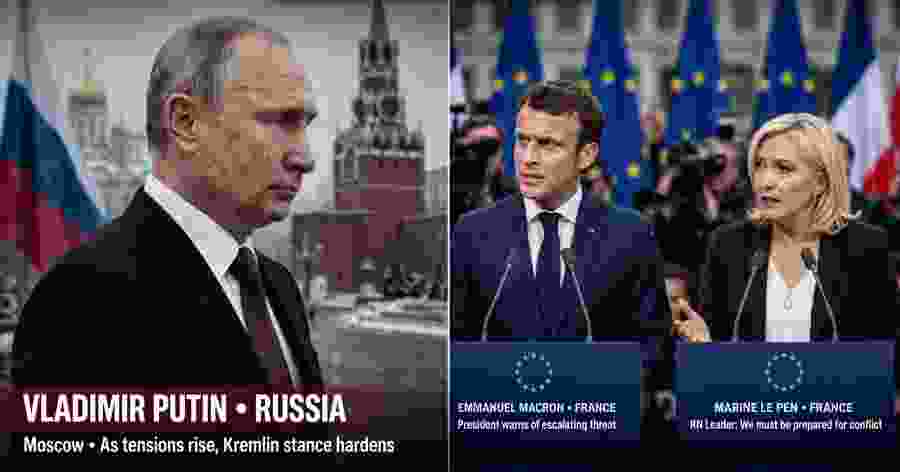


PARIS / MOSCOW — Geopolitical tensions between Russia and NATO have reached a heightened state following stark warnings from top French political leaders. French President Emmanuel Macron and National Rally leader Marine Le Pen have separately accused Moscow of escalating hybrid warfare, cyber operations, and intimidation tactics against European nations, even as the Kremlin flatly rejects the allegations.
Macron Warns of Intensifying Russian Hybrid Attacks
Following a high-level briefing with French state intelligence and military security officials on September 18, 2026, President Emmanuel Macron issued a stern warning regarding rising hybrid threats.
- Targeted Operations: Macron stated that France and other European nations have increasingly become targets of Russian cyberattacks, drone incursions, flare firings near naval vessels, and covert operations.
- Defensive Posture: In response, Interior Minister Laurent Nuñez convened regional prefects to heighten vigilance, directing the government to formulate enhanced protection plans for critical infrastructure, sensitive defense sites, and technological bases.
Marine Le Pen and Jordan Bardella Issue Joint Warning
In a striking and politically significant move, French presidential contender Marine Le Pen and National Rally President Jordan Bardella issued a joint warning against Moscow on September.
- Accusations of Destabilization: The pair accused the Kremlin of employing psychological pressure, intimidation, and clandestine operations to sway French political decision-making.
- Defending Sovereignty: Emphasizing that Russia must not be allowed to dictate French policy through indirect or direct pressure, the warning drew particular attention given Le Pen’s historical political scrutiny and past ties with Moscow.
The Kremlin Hits Back: Categorical Rejections
Moscow has firmly rejected all accusations leveled by French political leaders.
- No Threat Posed: Kremlin spokesperson Dmitry Peskov stated that Russia poses no threat whatsoever to France or any other European country, insisting that Moscow “threatens no one and blackmails no one”.
- Fabricated Pretexts: The Kremlin argued that Europe is manufacturing or exaggerating a nonexistent Russian threat to justify tougher policies and deeper military integration.
Bottom Line
With European nations ramping up defense readiness amid the prolonged war in Ukraine, the friction between NATO capitals and Moscow continues to intensify. Whether European leaders are genuinely bracing for direct confrontation or building a cohesive security narrative against the Kremlin, the political and strategic divide across the continent remains deeper than ever.