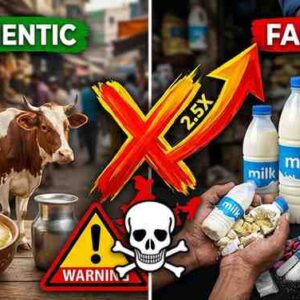


NEW DELHI, March 2026 — India’s kitchen staples—milk, ghee, and paneer—are currently at the center of a rapidly escalating counterfeiting crisis. A startling new report by the Authentication Solution Providers Association (ASPA) and Crisil reveals that counterfeit incidents in the dairy sector have jumped 2.5 times since 2018, with 187 major cases reported in 2025 alone.
From high-volume essentials like milk to premium goods like ghee and mustard oil, the dairy segment has emerged as the most vulnerable pocket in India’s FMCG sector. Sold at prices nearly 20% lower than genuine brands, these fakes are often indistinguishable to the average consumer, making them a “silent killer” in the Indian pantry.
A Fragmented Supply Chain: Where the Rot Creeps In
The crisis is rooted in India’s complex and largely informal food processing industry, where over 75% of players remain unregulated. Experts clarify that adulteration rarely begins at the farm level; instead, it enters the system through layers of middlemen, collection centers, and transport networks.
Recent enforcement actions highlight the scale of the problem:
- Rajasthan: Authorities recently seized and destroyed 1.5 lakh kilograms of expired products being sold under the “Amul” brand name.
- Uttar Pradesh: Over 1,400 kg of adulterated khoa was destroyed ahead of the Holi festive season.
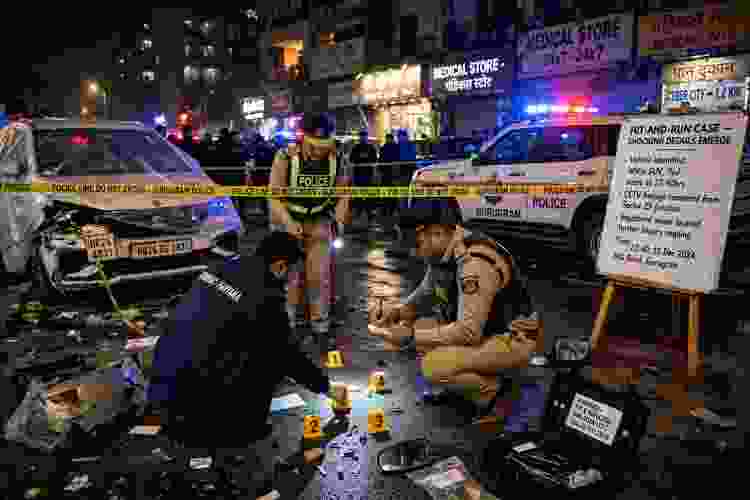
The consequences of this “illusion of purity” are becoming fatal. In Andhra Pradesh earlier this month, at least 16 people died after consuming milk contaminated with a toxic coolant chemical.
The Tech Battle: Blockchain vs. Middlemen
While advanced solutions like QR tracking, blockchain systems, and forensic markers exist to verify authenticity, they are often too costly for the small, low-margin players that dominate the food industry. Some brands, like Akshayakalpa, are attempting to solve this by bypassing middlemen entirely and working directly with farmers to ensure a “closed-loop” supply chain.
Regulators are also tightening the noose. The Food Safety and Standards Authority of India (FSSAI) has now made licenses mandatory for all milk vendors, and local authorities are required to submit progress reports every two months to track enforcement efforts.
Is a “Pharma-Style” Reset Needed?
To restore trust, experts point toward the pharmaceutical sector’s 2023 mandate of QR codes for top drug brands to help track products and curb counterfeiting. Expanding this level of digital oversight to dairy and vaccines could provide the transparency needed to flush out counterfeiters across the entire supply chain.
For now, the era of “trusting the local vendor” is under threat. As the report concludes, what reaches the Indian kitchen every day is no longer just a question of brand loyalty—it is a matter of life and safety.
Bottom Line
The surge in fake dairy is fueled by a system that rewards small, unregulated players for cutting corners. Until the gap between the informal and formal supply chains is bridged with technology and stricter enforcement, the “milk” in your fridge may remain a dangerous gamble. What looks like a staple of health is, for many, becoming a source of fear.