



Lucknow, March 2026 — The Global Economy is hitting a breaking point as the “triple threat” of energy blockades, market whiplash, and corporate migrations redefines the cost of doing business.
What was once whispered in boardrooms as “calculated risk” has become a loud, chaotic reality. From the closing of vital sea lanes to the sudden flight of billion-dollar headquarters, the global corporate map is being redrawn in real-time.
Energy Strains: The Hormuz Chokehold
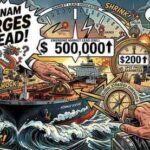
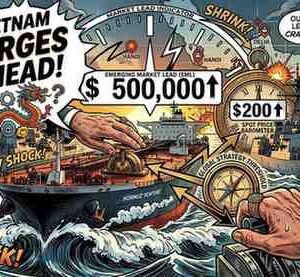
The world’s energy pulse has slowed to a dangerous crawl. The effective closure of the Strait of Hormuz—the world’s most important oil artery—has sent shockwaves through every sector from logistics to local retail.
- The Supply Void: With nearly 20% of global oil and a massive chunk of LNG trapped behind geopolitical lines, the “just-in-time” energy model has collapsed.
- Price Shock: Crude oil has surged past $90 per barrel, with some analysts predicting a climb toward $200 if the blockade persists.
- The Local Toll: In manufacturing hubs from Germany to India, factories are facing “energy quotas,” forcing production cuts that will inevitably lead to higher prices for everything from plastics to electronics.
Market Volatility: The End of Certainty
The financial markets are no longer reacting to data; they are reacting to fear. The era of predictable, “easy money” has been replaced by Structural Volatility, a state where a single headline can wipe out months of gains.
- Credit Contagion: The recent collapse of major private credit firms has triggered a “dash for cash.” Investors are fleeing speculative bets, causing sharp drops in banking stocks and tightening the belt on small-to-medium enterprises (SMEs).
- The Resilience Pivot: Investors are no longer rewarding “growth at all costs.” Instead, capital is flowing toward companies that prioritize redundancy over efficiency. Having a lean supply chain is now seen as a liability; having a “buffered” one is the new gold standard.
Massive Corporate Shifts: The Great Migration
As stability vanishes in traditional hubs, the world’s largest corporations are physically moving their futures. This isn’t just about taxes anymore—it’s about survival and sovereignty.
- The Texas Influx: In a symbolic blow to the East Coast, giants like Exxon Mobil are leading a mass migration of legal and operational headquarters to Texas, seeking a more stable regulatory environment and lower operational hurdles.
- Friend-Shoring: Manufacturing is “coming home” or moving to “safe harbor” nations. Vietnam and India are seeing a massive influx of tech and automotive investment as firms abandon volatile regions to build high-tech “fortress” factories closer to reliable trade routes.
- The AI Management Layer: Internally, companies are stripping away traditional hierarchy. With AI now handling complex logistics, the “middle management” tier is being compressed, shifting the corporate DNA from human-heavy oversight to automated, algorithmic execution.
The Illusion of Global Stability
For decades, the global economy operated on the illusion that trade would always be free and energy would always be cheap. The current crisis has stripped away that mask.
- The Winners: Countries and companies that invested in domestic energy (renewables/nuclear) and decentralized supply chains are the only ones standing firm.
- The Losers: Those reliant on a single trade route or a single source of credit are finding their foundations crumbling overnight.
Bottom Line
The global business landscape is no longer a “flat world.” It is a fractured one. The era of “globalization by default” is dead, replaced by a high-stakes game of geopolitical chess. For the modern CEO, the priority has shifted from “How do we grow?” to “How do we stay operational when the world shuts down?”