



Introduction: A Paradigm Shift in Education
India’s EdTech industry has witnessed an unprecedented surge in popularity over the past decade, fueled by increased smartphone penetration, affordable internet, and the pandemic-induced transition to online learning. As platforms like BYJU’S, Unacademy, and Vedantu dominate the market, they promise to revolutionize education. However, beneath the surface lies a nuanced narrative of societal expectations and pressures.
The Promise of Accessibility and Inclusivity
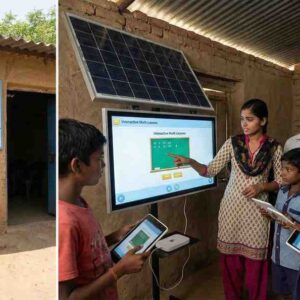
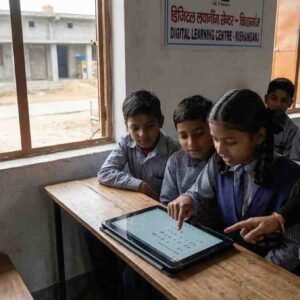
- Bridging the Gap: EdTech platforms pledge to democratize education, reaching students in remote corners of India. Courses on coding, AI, and competitive exams are now a click away.
- Economic Optimism: Parents see EdTech as a gateway to upward mobility, pushing children to excel in competitive exams like JEE, NEET, or even global tests like SAT.
- Government Collaboration: Initiatives like DIKSHA (Digital Infrastructure for Knowledge Sharing) further promote EdTech’s accessibility to underprivileged students.
The Subtle Expectations: Opportunity or Pressure?
While EdTech platforms promote personalized learning, they subtly create new benchmarks for students, parents, and teachers:
- Students Under the Microscope:
- With adaptive learning tools tracking progress, students face constant scrutiny.
- A “race to be the best” mindset arises as peers boast about high scores achieved with gamified learning tools.
- Parental Expectations Soar:
- Parents, already invested in traditional tuitions, now invest in premium EdTech subscriptions.
- They expect instant results, assuming that access to these platforms guarantees academic success.
- Teachers and the New Normal:
- Traditional educators face competition from AI-driven EdTech tools.
- Expectations shift as students demand engaging, tech-savvy teaching styles in classrooms.
Challenges and Overlooked Realities
- Affordability vs. Accessibility:
- Premium EdTech subscriptions remain out of reach for economically weaker sections, contradicting claims of inclusivity.
- Free resources often lack the depth or personalization of paid options.
- Screen Dependency:
- Prolonged screen time impacts mental health, creating a new layer of challenges for children.
- Parents struggle to balance digital learning with offline activities.
- Urban-Rural Divide:
- Rural students with poor internet connectivity are often left behind.
- A gap emerges between those with high-end devices and those dependent on basic smartphones.
What Lies Ahead for India’s EdTech Boom?
- Policy Interventions:
- The government must regulate EdTech pricing and ensure quality content reaches all strata of society.
- Holistic Learning:
- Platforms should integrate extracurricular and mental health modules to balance academic rigor.
- Teacher Empowerment:
- Training programs for traditional educators can bridge the gap between offline and online pedagogies.
A Call for Balance
The rise of EdTech in India is undoubtedly a game-changer. However, the subtle expectations it fosters can inadvertently add pressure on students, parents, and educators. The challenge lies in ensuring that this digital revolution serves as a tool for empowerment rather than a source of anxiety.
As India strides toward becoming a global education hub, can the EdTech industry truly deliver on its promise without widening existing inequalities?