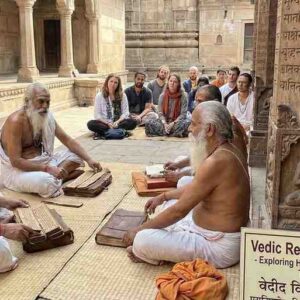




“Guardians of Wisdom: How Shastras Decode and Expand the Vedic Legacy”
The Vedas, revered as the primordial source of Hindu philosophy, are not merely ancient scriptures but timeless reservoirs of spiritual, ethical, and cosmic wisdom. However, their poetic metaphors and profound abstraction often make their teachings enigmatic to the untrained seeker. Herein lies the significance of the Shastras, which serve as the interpretative frameworks and practical guides to unravel the mysteries of the Vedas. These texts, embodying a synergy of spiritual inquiry and societal pragmatism, act as a bridge between the transcendental truths of the Vedas and the lived realities of human existence.
The Nature and Purpose of Shastras
Derived from the Sanskrit rootśās(to teach or instruct), the Shastras are a vast corpus of literature that complements and contextualizes the Vedic texts. While the Vedas areshruti(divinely revealed), the Shastras aresmriti(remembered), meaning they adapt and apply the eternal principles of the Vedas to specific times, places, and circumstances.
Categories of Shastras:
- Dharma Shastras: Ethical and legal codes, such as the Manusmriti, addressing morality and societal order.
- Arthashastra: Treatises on governance and statecraft, exemplified by Kautilya’s seminal work.
- Yoga Shastras: Philosophical and practical guides like Patanjali’s Yoga Sutras, rooted in the meditative principles of the Vedas.
- Vedanga Shastras: Auxiliary sciences, including phonetics (Shiksha) and grammar (Vyakarana), designed to ensure the accurate preservation of Vedic mantras.
Shastras as Interpreters of the Vedas
The Shastras perform the essential function of translating the lofty ideals of the Vedas into actionable principles for individual and societal conduct.
- Elaborating Vedic Ethics:
- The Vedas lay the foundation of universal values such as rita (cosmic order) and dharma (righteousness). The Shastras elaborate on these principles, providing practical frameworks for morality, justice, and duty.
- For instance, while the Rigveda extols the virtues of truthfulness and harmony, the Dharma Shastras codify these virtues into laws and social norms.
- Decoding Ritual Practices:
- The Vedic emphasis on yajna (sacrifice) is ritualistically complex and symbolically rich. The Shastras explain the purpose and procedure of these rituals, ensuring their alignment with cosmic and ethical goals.
- Philosophical Integration:
- The abstract metaphysical dialogues of the Upanishads find clarity and accessibility in the Yoga Shastras, which transform esoteric spiritual ideas into step-by-step disciplines for personal transformation.
Examples of Shastric Contributions
- Patanjali’s Yoga Sutras:
- This text distills the spiritual essence of the Vedas into an eightfold path (Ashtanga Yoga), offering a structured journey toward self-realization and liberation (moksha).
- Kautilya’s Arthashastra:
- Rooted in Vedic principles of governance, this treatise merges ethical leadership with practical strategies for economic and political stability.
- Vedanga Sciences:
- Texts like Shiksha ensure the precise phonetic recitation of Vedic mantras, safeguarding their spiritual efficacy and authenticity.
Contemporary Relevance of the Shastras
While the Shastras are ancient, their relevance in modern times remains profound:
- Ethical and Social Guidance:
- The Dharma Shastras’ emphasis on accountability, justice, and communal welfare provides timeless frameworks for navigating ethical dilemmas and fostering societal harmony.
- Philosophical Inquiry:
- The Shastras inspire a balanced approach to spirituality, integrating intellectual inquiry with practical application, resonating with the modern seeker’s quest for holistic growth.
- Preservation and Accessibility:
- Initiatives like the National Manuscripts Mission and digital repositories ensure that these texts are preserved and studied, enabling their wisdom to transcend generations.
Conclusion
The Shastras are not merely supplementary texts but indispensable tools that decode and expand the teachings of the Vedas. They embody the dynamic interplay of eternal truths and temporal realities, ensuring that the profound wisdom of the Vedas remains accessible and actionable. As humanity continues its pursuit of meaning and balance, the Shastras serve as timeless guides, bridging the sacred and the practical, the abstract and the tangible.
Their enduring legacy challenges us to honor tradition while adapting its insights to contemporary needs, reaffirming their role as both guardians of the past and beacons for the future.