



New Delhi, India – 2025
TheNational Education Policy (NEP) 2020has redefined India’s educational priorities, firmly shifting the focus from physical infrastructure tolearning outcomes and academic value. For decades, schools with sprawling campuses, modern facilities, and expansive playgrounds were perceived as the gold standard of education. However, the NEP challenges this notion, emphasizing thateducational value—delivered through quality teaching, innovative learning methods, and holistic student development—far outweighs the importance of physical facilities.
As India’s education sector adapts to this forward-thinking policy, the question arises: Does the size of a school’s infrastructure determine its success anymore? The NEP’s answer is clear—no.
The NEP’s Vision: Learning Over Luxury
The NEP focuses onacademic rigor, skill-based education, and holistic development, encouraging schools to prioritize what truly matters:
- Improving Learning Outcomes: Emphasizing competency-based learning and critical thinking over rote memorization.
- Teacher Empowerment: Enhancing teacher training and pedagogy to ensure quality instruction.
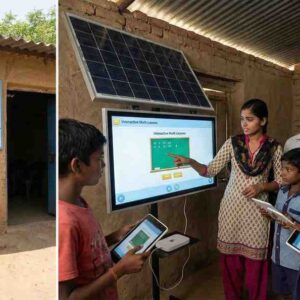
- Technology Integration: Leveraging digital tools to make quality education accessible, even where infrastructure is limited.
- Holistic Development: Promoting life skills, creativity, and emotional intelligence alongside academics.
This approach recognizes thateducational excellencecomes from effective teaching, innovation, and student engagement, not from the grandeur of buildings or playgrounds.
The Infrastructure Illusion: Do Facilities Guarantee Success?
For years, schools with sprawling campuses, plush classrooms, and high-end facilities have been marketed as superior. However, recent studies challenge this assumption. A2023 UDISE reportrevealed that while 35% of rural schools lack modern infrastructure, many still produce outstanding academic results due to theirfocus on teaching quality and student engagement.
Key insights include:
- Schools in Kerala and Himachal Pradesh continue to outperform their better-funded counterparts, with modest facilities but strong academic frameworks.
- Urban schools with limited space in cities like Mumbai and Chennai are achieving national excellence through technology-enabled learning and creative resource optimization.
This highlights a growing disconnect:facilities do not ensure educational value—effective learning strategies and committed educators do.
Technology: The Equalizer in Limited Spaces
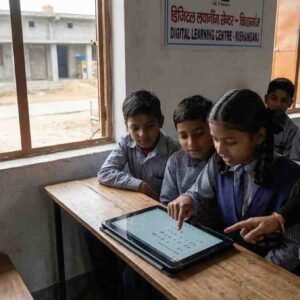
The NEP recognizes that infrastructure disparities—especially in rural India—can be addressed throughtechnology-driven solutions. Virtual learning platforms, smart classrooms, and digital tools are enabling schools to overcome physical limitations and deliver quality education.
Case Examples:
- In Bihar and Odisha, rural schools have introduced virtual science labs, offering practical education without physical lab infrastructure.
- Schools in space-constrained urban centers are embracing blended learning, combining physical instruction with digital tools to optimize small classrooms.
Technology has democratized education, proving that schools no longer require large facilities to deliver world-class learning experiences.
Focus on Teachers: The True Catalysts of Change
While physical facilities provide an external environment, it is theteacher’s rolethat determines a student’s success. The NEP strongly emphasizesteacher trainingand professional development, ensuring educators are equipped to deliver engaging and outcome-driven instruction.
Key reforms include:
- Mandatory continuous professional development programs for teachers.
- Adoption of innovative pedagogy that fosters student curiosity, problem-solving, and creativity.
The message is clear: an exceptional teacher can transform even the most modest classroom into a thriving hub of knowledge.
Balancing Academics with Physical Activity
While the NEP shifts focus to academic value, it does not dismiss the importance of physical and emotional well-being. Schools are encouraged tomaximize available spacesfor physical activities, such as:
- Indoor programs: Yoga, dance, and martial arts require minimal physical space but promote discipline and fitness.
- Community collaboration: Schools partnering with local sports facilities and parks to provide physical education opportunities.
This approach ensures abalanced educationwhile acknowledging India’s space constraints, particularly in densely populated cities.
Global Lessons: Quality Over Quantity
Globally, countries with exemplary education systems prioritizelearning qualityover infrastructure.
- Finland: Known for its emphasis on teacher quality and personalized learning, Finnish schools often have modest facilities but achieve stellar results.
- Singapore: Technology and structured pedagogy allow compact schools to deliver top-tier education without excessive reliance on physical space.
- Japan: Schools prioritize discipline, academics, and skill-based learning in resource-efficient environments.
The NEP aligns India with these global benchmarks, proving thateducational excellencecomes from the depth of teaching, not the breadth of campuses.
Challenges: Can Facilities Be Ignored Completely?
Despite the NEP’s progressive outlook, experts caution against completely sidelining infrastructure. Facilities such aslibraries, science labs, and playgroundsplay a role in fostering creativity, collaboration, and experiential learning. The challenge lies in finding a balance:
- Focus on learning quality while ensuring minimum infrastructure standards are met.
- Optimize smaller spaces through multi-purpose zones and community partnerships.
- Integrate technology as a cost-effective supplement to physical resources.
Conclusion: Educational Value Takes Center Stage
The NEP 2020 sets a new benchmark for schools, redefining success as a measure oflearning outcomes, innovation, and teaching qualityrather than physical grandeur. By placingeducational valueabove facilities, the policy creates a level playing field for schools across rural and urban India.
Schools, regardless of size or resources, now have the opportunity to excel through:
- Robust pedagogy
- Teacher excellence
- Technology-driven innovation
As India moves forward in implementing the NEP, the message is clear:True success lies in nurturing knowledge, creativity, and skills—not in the size of the campus but in the impact of the classroom.