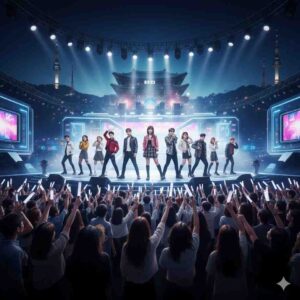




Seoul – 2025
If K-Pop was the gateway,K-Dramas became the passport.And today, South Korea is no longer just exporting media—it’s exportinglifestyle, language, food, fashion, and even geography.
From the cliffside cafés of Busan to the hanbok rental shops near Gyeongbokgung Palace, South Korea has seamlessly fused its entertainment output withtourism, consumer culture, and national branding, creating a full-circle phenomenon where fiction shapes footfall.
Welcome toHallyu 3.0—where global viewers don’t just binge-watch Korean stories. Theybook flights to live them.
K-Dramas as Cultural Catalysts
Shows likeCrash Landing on You,Goblin,Extraordinary Attorney Woo, andTwenty-Five Twenty-Onehave done more than top charts—they’ve turnedfilming locations into global pilgrimage sites.
Whether it’s:
- The beaches of Jeju Island
- The Nami Island woods from Winter Sonata
- Or the cafes, bridges, and boutiques featured in Itaewon Class
These locations now draw international tourists, particularly fromJapan, India, Southeast Asia, and Latin America, who wish to experience the atmosphere they fell in love with onscreen.
K-Dramas, in essence,market Korea without a slogan.
How the Government is Systematizing Cultural Tourism
The Korean government, recognizing the multiplier effect of entertainment, has integrated K-Content into tourism policy:
- Filming site preservation programs with signage, photo zones, and curated maps
- Visa-on-arrival initiatives targeting fans from top-viewing countries
- The “K-Culture Roadmap,” a national project that links food, film, and folklore tours across cities
- Partnerships with airlines and hospitality chains, offering Hallyu-themed packages and fan tours
This has led toa 48% increase in cultural tourism revenue since 2021, even as global travel trends shifted post-pandemic.
K-Beauty, K-Fashion, and K-Food—The Lifestyle Ecosystem
Once visitors arrive, the screen-to-street experience expands into consumption:
- K-Beauty stores offering products seen in dramas
- Streetwear outlets mirroring idol wardrobes
- Michelin-recognized restaurants serving meals inspired by iconic drama scenes
- Cooking classes, makeup tutorials, and hanbok experiences curated for tourists seeking a lifestyle, not just landmarks
What began as passive viewership has becomeactive cultural participation.
Language and Learning as a Legacy Effect
One of the most surprising effects of K-Drama popularity is thesurge in Korean language enrollments. Institutions likeKing Sejong Instituteand online platforms such as TalkToMeInKorean have reported record sign-ups from non-Korean viewers.
“I watched five dramas before I realized I was picking up sentence structures,” says Isha, a 22-year-old fan from Mumbai.
“Now, I’m saving up for a trip to Korea to study more—and visit theStart-Upshooting locations.”
The drama doesn’t end with the final episode—it begins a new script in real life.
Final Word
South Korea’s cultural export model isn’t built on spectacle—it’s built onsynergy.
From screen to skin, script to street, it offers a cohesive, immersive identity that travels further than tourism brochures ever could.
And in doing so, Korea has cracked the code every nation dreams of:
turning its stories into global destinations—and its destinations into lifelong dreams.