


New Delhi, India – 2025
The evolving landscape of modern education, particularly under the influence of the National Education Policy (NEP) 2020, prompts a critical reevaluation of traditional school elements, including the role of playgrounds. As educational priorities shift toward more comprehensive and technologically integrated approaches, the relevance of expansive playgrounds in schools is being questioned. Let’s delve into whether playgrounds are maintaining their importance or becoming a secondary consideration in the context of modern educational demands.
Shifts in Educational Focus
1. Emphasis on Holistic Development:
While physical education remains a crucial component of holistic student development, the NEP encourages a broader interpretation that encompasses mental, emotional, and social health. This shift suggests that physical activities could be diversified and not necessarily confined to traditional playground settings.
2. Integration of Technology:
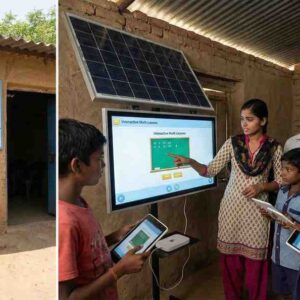
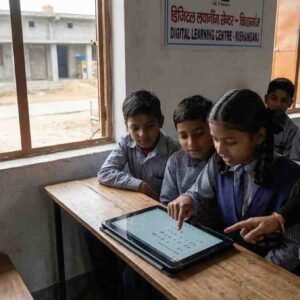
The integration of digital tools in education extends to physical education as well. Virtual reality (VR) and augmented reality (AR) platforms are increasingly used to simulate physical activities, potentially reducing the dependence on large physical spaces for engaging in sports and exercises.
Changing Dynamics of School Infrastructure
1. Urban Space Constraints:
In urban areas, where space is at a premium, schools often struggle to allocate large areas for playgrounds. The NEP provides strategies for these schools to utilize multipurpose spaces and community facilities, thereby adapting to geographical limitations while still addressing the physical activity needs of students.
2. Resource Optimization:
With the rising costs associated with maintaining large physical infrastructures, schools are prompted to optimize resources. This often means prioritizing indoor and smaller, versatile activity areas that can support a variety of physical education programs without necessitating expansive outdoor playgrounds.
Educational Outcomes vs. Physical Facilities
1. Academic Performance Focus:
There is an increasing focus on academic outcomes and preparing students for a competitive global environment. Schools are incentivized to enhance their academic programs and support services, which may shift focus and funding away from traditional playground investments.
2. Evidence-Based Approaches:
Research continues to evolve on the most effective methods for promoting physical health in children. This includes studies suggesting that structured physical activities, which can be conducted in limited spaces, might offer benefits comparable to those obtained from unstructured play in large playgrounds.
Global Trends and Innovations
1. Global Best Practices:
Internationally, there is a trend toward maximizing limited educational spaces by designing innovative, flexible environments that can serve multiple educational purposes. Examples from countries like Singapore and Japan show that effective physical education programs do not always require traditional expansive playgrounds.
2. Community Integration Models:
Schools are increasingly looking to integrate with local community resources, using parks, local sports clubs, and public facilities to supplement their physical education programs. This approach not only addresses the space constraints but also promotes a greater community connection and diverse social interactions for students.
Conclusion: A Balanced View on Playgrounds
While playgrounds are not losing their relevance entirely, their traditional role and the extent of space they occupy are undoubtedly undergoing transformation. Modern education under the NEP emphasizes flexibility, resource efficiency, and the integration of technology, all of which guide a reimagined approach to how physical activity is facilitated in schools. Playgrounds continue to contribute to the educational experience, but they do so now as part of a broader, more diverse array of physical education resources that reflect the changing needs and constraints of contemporary schooling.